
Process Control Loop Tuning
Maximize Return on Your Regulatory Control Investment
Every advanced process control system, every optimization layer, every dollar of automation investment ultimately depends on something surprisingly basic: whether the underlying PID control loops are actually tuned correctly. A single miscalibrated sensor or poorly tuned loop can quietly undermine everything built on top of it — no amount of advanced analytics or model predictive control can fully compensate for a regulatory control layer that isn't performing.
Poorly tuned loops don't always announce themselves. They show up as small, chronic inefficiencies: excess fuel consumption, higher rejection rates on "on-spec" product, unnecessary wear on actuators and valves, and process variability that never quite goes away no matter how much is spent on higher-level optimization. Capstone Technology Canada's specialists bring more than twenty years of hands-on tuning experience to identifying and correcting exactly these issues.
 |
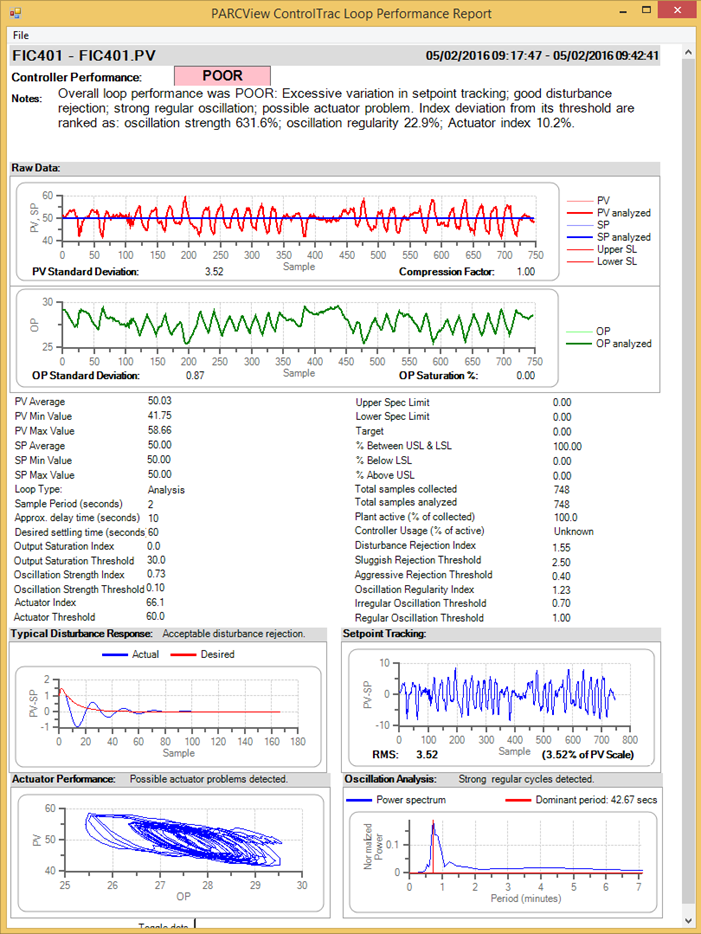 |
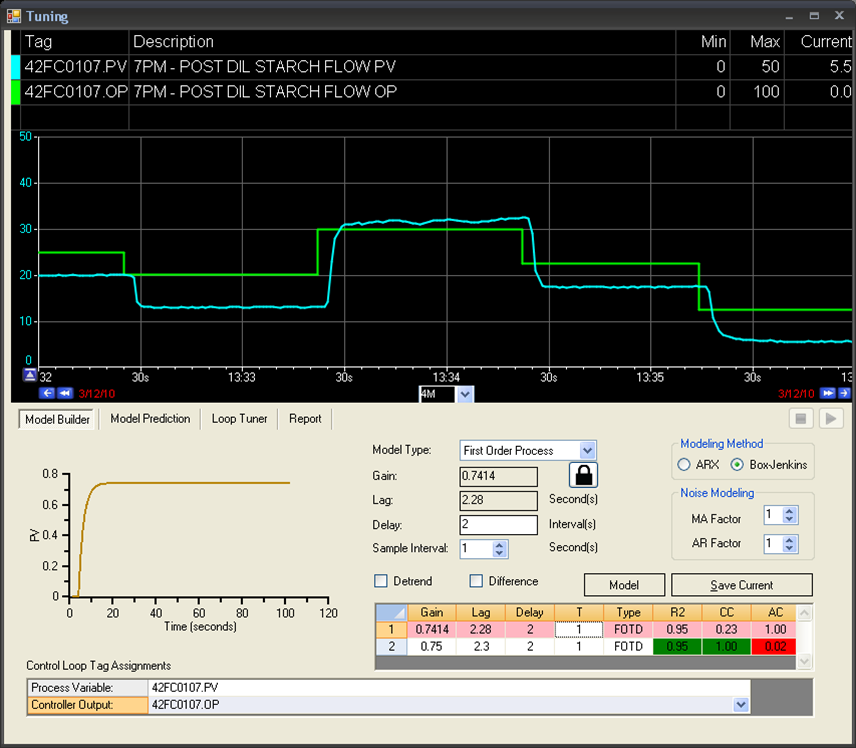
Loop Performance | Loop Tuning
A practical, structured loop performance assessment addresses every dimension of how a control loop is actually behaving:
- Controller Performance — How well the controller is holding its target, and where it's falling short
- Raw Data and Statistics — Grounding the assessment in actual process data, not assumptions about how the loop "should" be behaving
- Disturbance Response — How quickly and cleanly the loop recovers when an upstream disturbance hits
- Setpoint Tracking — Whether the loop follows setpoint changes accurately and without excessive overshoot
- Actuator Performance — Identifying valve stiction, hysteresis, and other mechanical issues that no amount of controller tuning alone can fix
- Oscillation Analysis — Detecting cyclic behavior that signals a loop fighting itself, another loop, or a mechanical constraint
Results are delivered in a way that requires minimal training to interpret — the goal is a clear, actionable performance picture, not a report only a controls engineer can decode. Our approach uses model-based tuning, removing the guesswork and trial-and-error that often characterizes manual PID tuning.
Bottom-Line Results
Loop tuning isn't a one-time fix — it's an ongoing discipline. Loops that were correctly tuned during commissioning can and do drift out of tune over time as equipment wears, process conditions shift, and feedstock changes. A regular loop maintenance program keeps your plant running at optimal levels continuously, rather than letting performance quietly erode until it becomes visible in a much bigger, more expensive problem.
Just as importantly, this is one of the highest-leverage ways to protect the investment you've already made in instrumentation, control systems, and process infrastructure. Advanced process control and optimization layers are built on top of the regulatory control layer — if that foundation isn't sound, the return on everything built above it is capped.
Why This Matters for Your Plant
If you're seeing inconsistent product quality, higher-than-expected fuel or energy costs, or process variability that persists despite other improvements, a loop performance assessment is often the fastest, lowest-cost place to look. It's an easy-to-implement, easy-to-understand starting point — and frequently uncovers the root cause behind problems that seemed to require far more expensive solutions.
Talk to a loop tuning specialist