Controlling a Process That Never Stops Changing
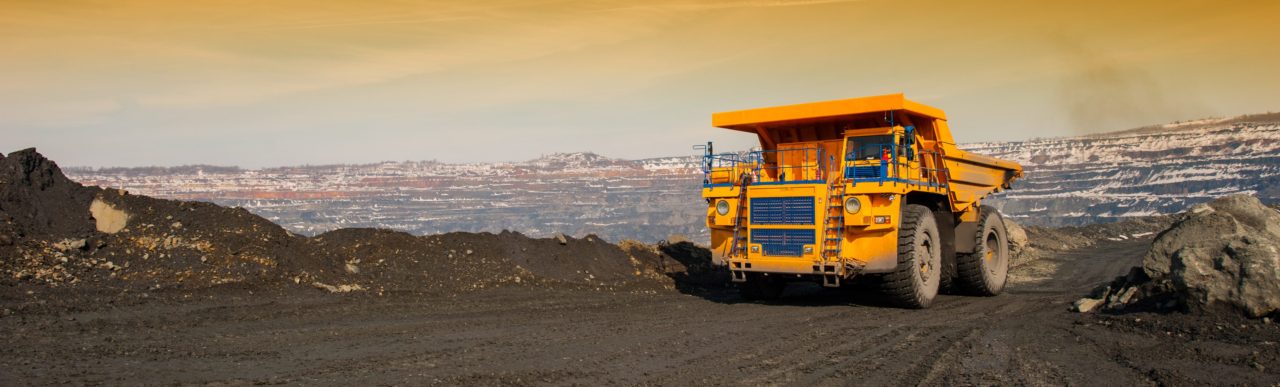
Mining process control has a problem most industries don't: the feedstock itself is inherently variable. Ore hardness, moisture, particle size distribution, and mineral composition shift continuously as material comes from different parts of a pit or different ore bodies — which means a control strategy tuned for one hour's feed can be wrong for the next. For a large international mining corporation, Capstone Technology Canada has carried out a series of advanced process control projects addressing exactly this problem, across several pelletizing units and iron ore concentrators — including AG mills, pellet induration, and balling circuits.
The Solution
Capstone's engineers worked closely with the client's operations team to understand how each circuit actually behaved — not just its theoretical design — before building an automated process control system around it. The resulting system centers on model predictive control layered with a learning component: it reviews production inputs and historical sensor data to suggest likely outcomes, using the accumulated experience of Capstone's process engineers to train it to reason through complex scenarios the way an experienced operator would. In practice, that means the system functions as an always-on, intelligent advisor — flagging the right adjustment before a deviation becomes a problem, and helping operations staff handle situations that don't fit a standard playbook.
The implementation itself uses industry-leading Advanced Process Control software, configured with multi-variable predictive constraint control, optimization algorithms tuned to each circuit, and automatic estimation of the pellet's physical properties — giving operators a real-time read on product quality characteristics that would otherwise only be available from periodic lab sampling.
The Results
Through standardizing and automating each project phase, the client has seen measurable operating-cost reductions, including a 3% increase in balling/induration performance and a 5% decrease in fuel consumption — meaningful numbers at the throughput scale a facility like this runs at. Beyond the immediate control benefits, Capstone's team runs preliminary surveys of production equipment to identify bottlenecks before they become constraints, feeding directly into equipment performance improvements, reduced downtime, and stronger safety outcomes on top of the process gains. [Adding the facility's approximate throughput, or the dollar/tonne impact of the fuel reduction, would make the scale of these results concrete for a reader sizing up their own operation.]
Why This Matters for Your Operation
Variability in mining feedstock isn't something a control system can eliminate — but it is something it can be built to handle gracefully, if the system is trained on enough real operating history and tuned by people who understand the process, not just the software. For mining and mineral processing operations weighing where to invest next, the combination of measurable fuel and throughput gains with reduced downtime is typically one of the faster-payback projects available, because it improves the economics of equipment you already own rather than requiring new capital assets.