
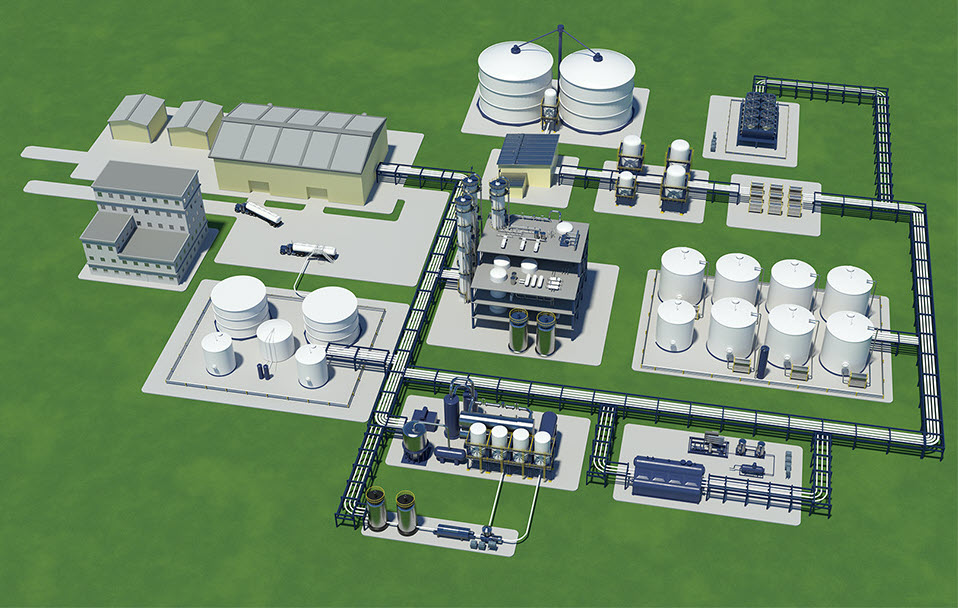
From Lab Bench to Boardroom: One Connected System
A high-production ethanol plant generates a constant stream of quality data — but for one of our clients, that data was scattered across multiple spreadsheets, manually tracked by operations staff with limited version control and no single source of truth. In a competitive industry running on thin margins, that kind of fragmented tracking isn't just inconvenient — it's a real cost. Any improvement that helps a plant tighten control over fermentation and reduce waste has direct bottom-line value.
Capstone Technology Canada was brought in to add new lab tests to the client's data collection system and eliminate the patchwork of spreadsheets entirely, replacing it with a single system that automatically imports lab data based on sample times and gives operations, quality, and management each the view they need.
Capturing Accurate Data at the Source
It starts on the plant floor and in the lab. Operations staff enter "rounds" information directly into the system, and lab technicians record fermentation test results as each batch progresses.
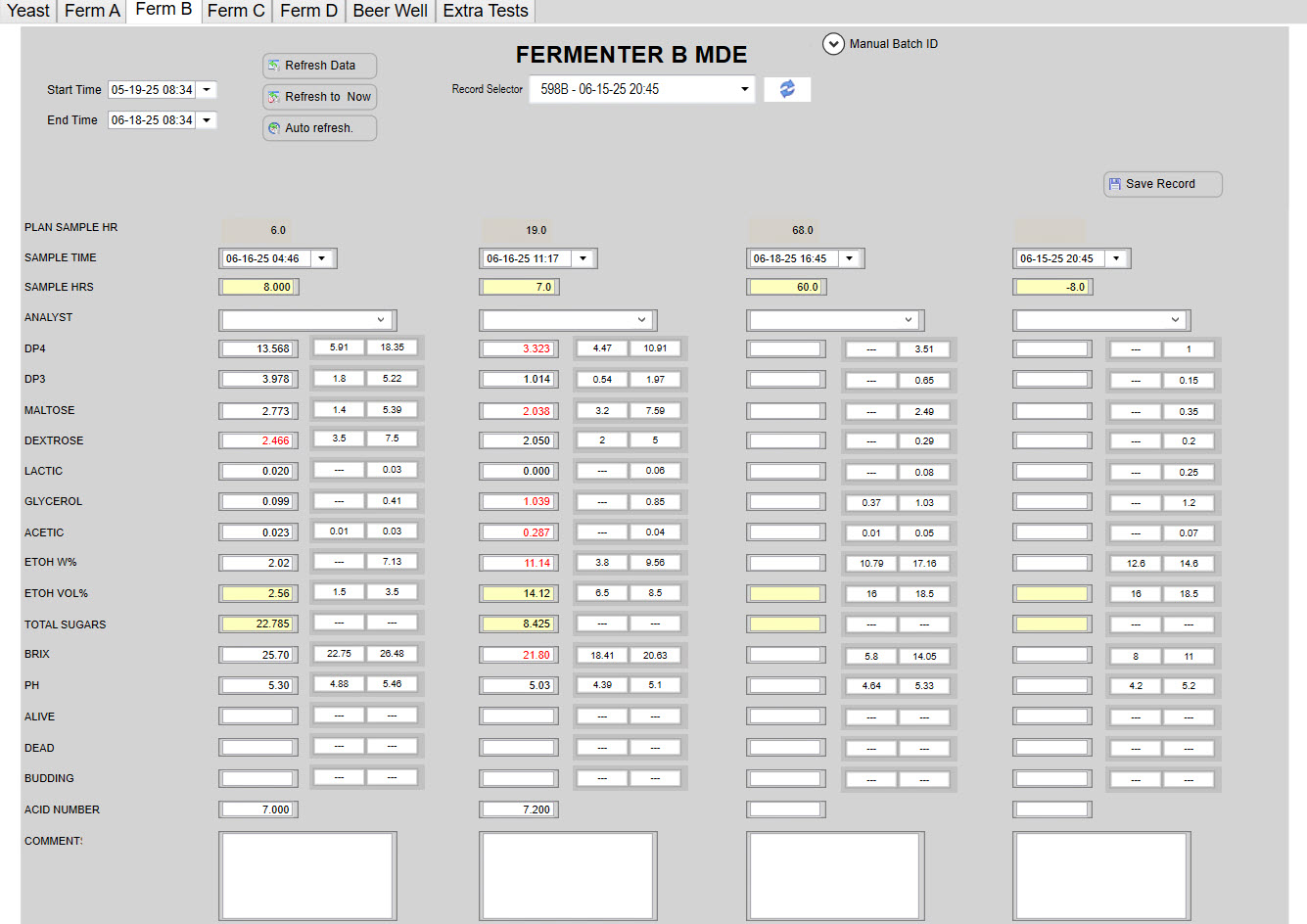
The Fermenter Entry Sheet is where operators enter lab test results directly into the system, feeding accurate, real-time data straight into the historian instead of a separate spreadsheet.
Built on a DataPARC historical data collection server, the system takes data from lab instruments and automatically converts it into properly structured tag data — no manual searching or gathering of test reports required. From there, real-time automation calculations generate accurate ethanol and additive reports, ongoing process monitoring, and change recommendations.
Monitoring Batches in Real Time
Once data is captured, operators need to know immediately whether a batch is tracking toward a healthy fermentation or starting to drift.
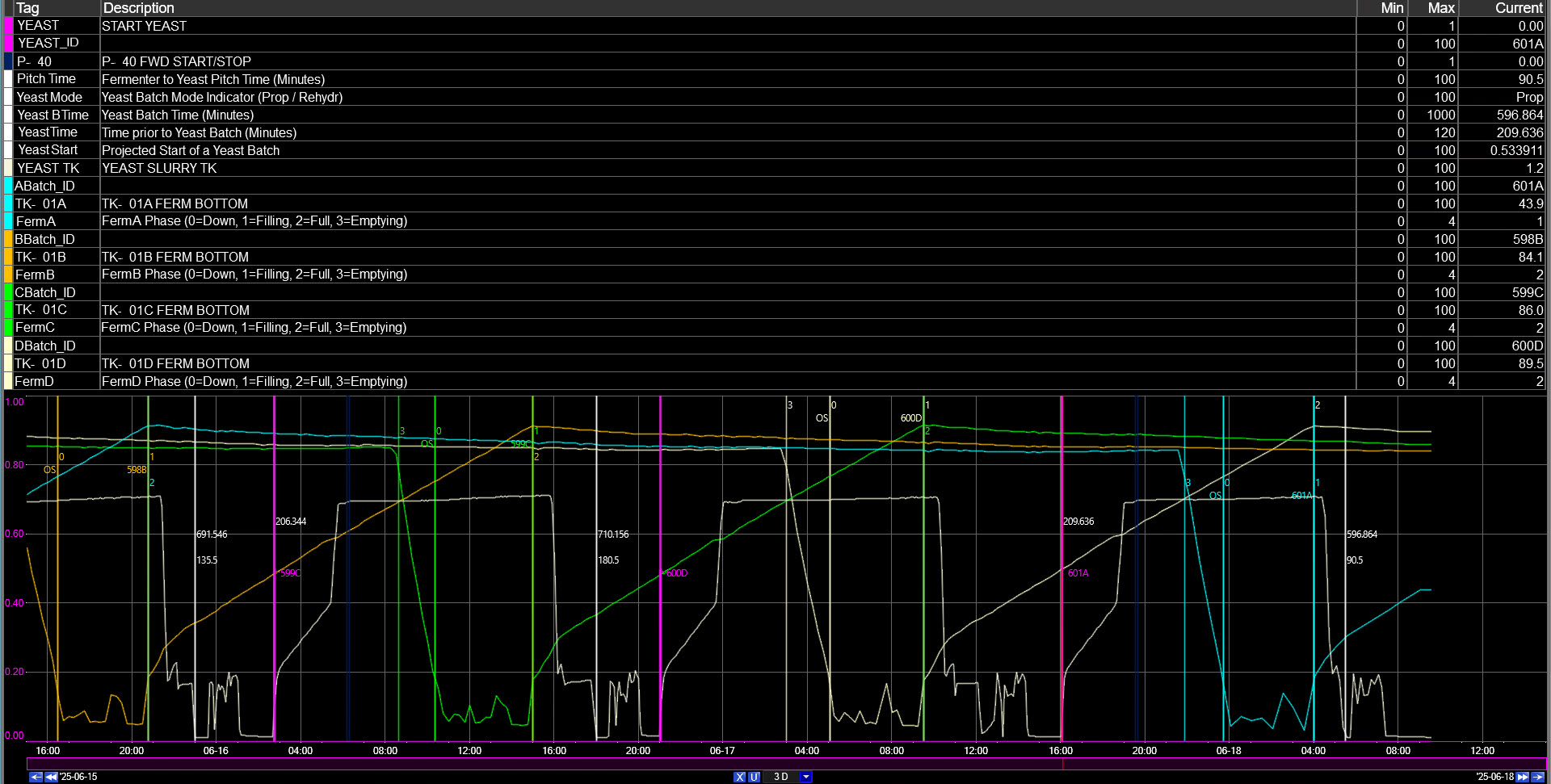
Fermenter Trends give operators a real-time view of whether the current batch is on track production-wise, making it possible to catch a deviation early rather than discovering it at the end of the cycle.
Operator graphics illustrate process operation for each individual batch run, so operators can see at a glance when ethanol production is optimal — and observe lab test values at every stage of the fermentation cycle. The system automatically assigns batch numbers whenever a fermenter empties and refills, and can be configured to key off known events, such as the automated start of a yeast batch, or timed intervals like a fixed number of hours into the current run. The same monitoring tracks the grain transformation process and assesses mash production efficiency and operational time, keeping a watchful eye on both site and lab activity to ensure everything runs smoothly.
Giving Management the Full Picture
Real-time monitoring on the plant floor is only half the system. Management needs a different view: aggregate production performance, not batch-by-batch detail.
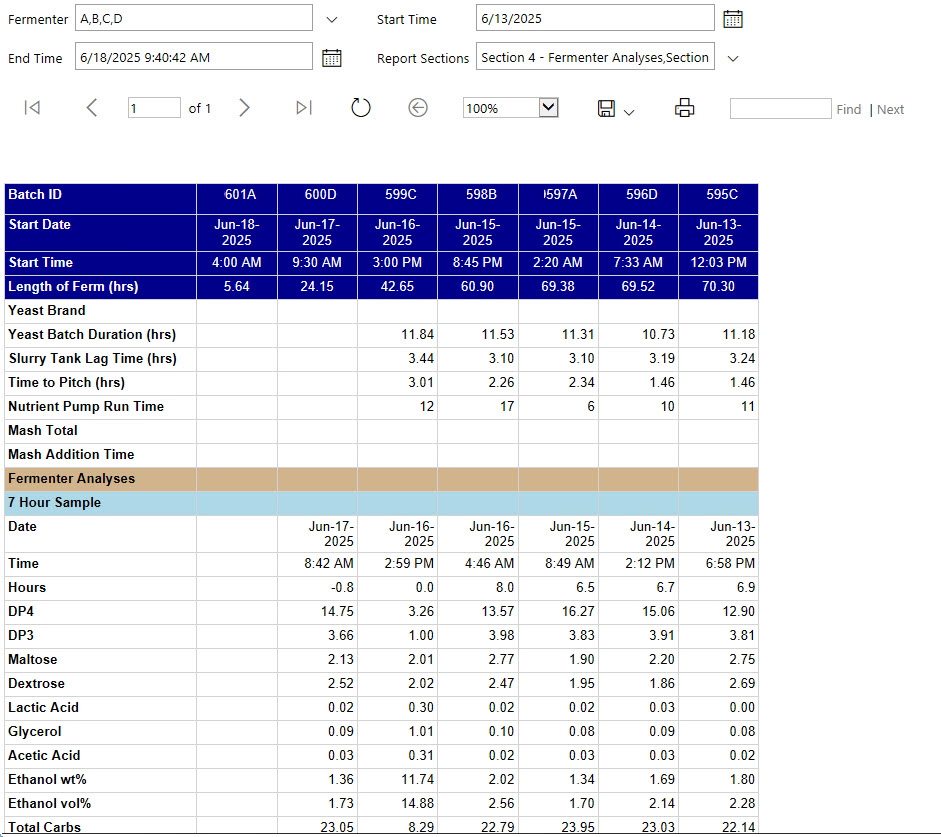
The Ethanol Report gives management a clear view of production totals, summarizing plant performance without requiring a batch-by-batch review.
For a closer look at any individual batch, a second, more detailed report is available.
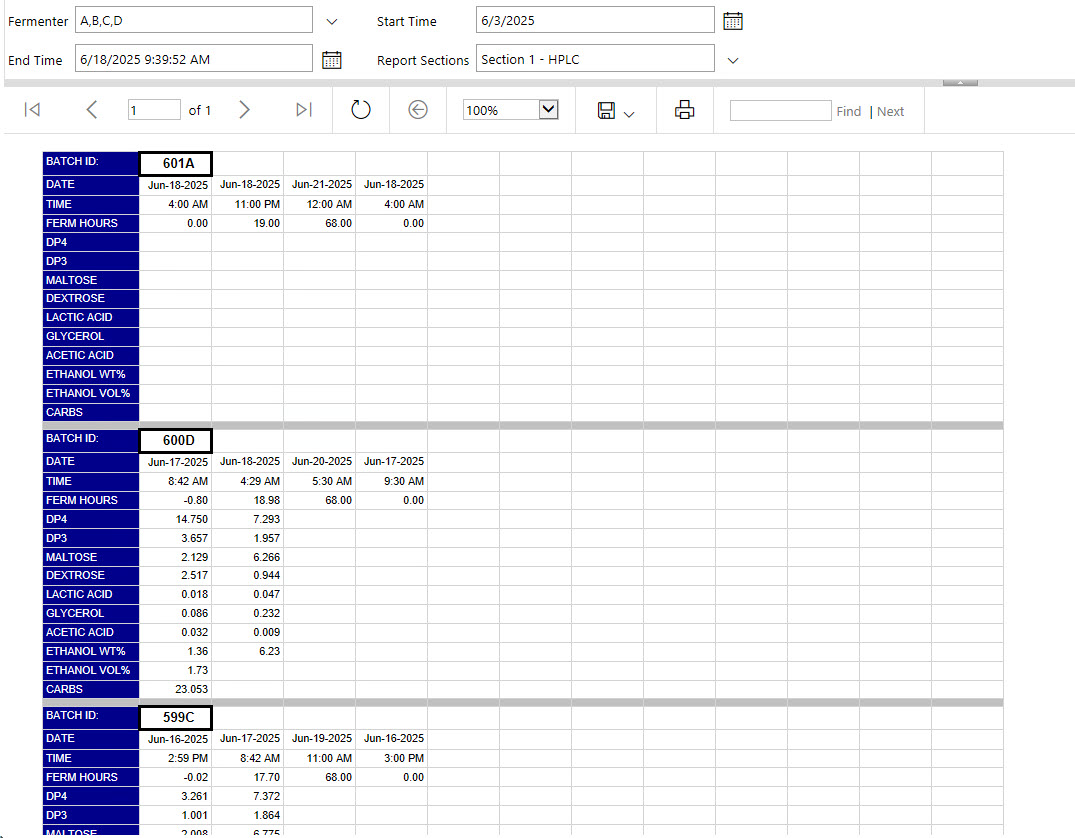
HPLC Report provides a detailed review of every test recorded for a specific ethanol batch, giving quality and operations teams full traceability back to the original lab results.
Together, these two reports give management both the summary view needed for day-to-day decisions and the detailed traceability required if a specific batch needs closer investigation.
The Result
By eliminating multiple disconnected spreadsheets and replacing them with a single, automated system, the client gained accurate, consistent reporting for additives and production use, and a far more effective way to monitor fermentation progress. Clients use visualization tools like PARCview alongside work task interfaces to track this data, improving monitoring accuracy while reducing the manual errors and access issues that come with juggling separate files.
Why This Matters for Your Plant
An ethanol plant's profitability depends on tight, consistent control over fermentation — and that control depends on accurate data reaching the right person quickly. Capstone Technology Canada's ethanol monitoring system closes that loop end to end: operators get real-time visibility to keep individual batches on track, and management gets the aggregate and detailed reporting needed to oversee the whole operation, all built on the same accurate, real-time data foundation.